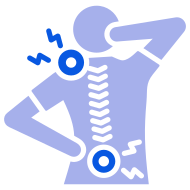
Man clutching lower back, indicating back pain.

Back Pain Treatment Focused on Long-Term Relief

Pain can start as a nuisance and quickly become the thing you plan around, especially when it affects work, sleep, and everyday movement. Back pain treatment at Midwest Pain Relief Center begins with a focused evaluation and a plan built around function, not quick fixes. If you are looking for clearer answers and a practical path forward, our team will help you understand what is driving your symptoms and choose next steps that match your goals.

What Is Back Pain?

Back pain can show up as a dull ache, sharp catching pain, stiffness, or nerve‒like symptoms that travel into the hip or leg. For many people, the problem centers in the lower back, where your spine handles daily loads from sitting, lifting, walking, and twisting. Because back pain has more than one “usual” cause, the best next step is to look at your pattern. What sets it off, what calms it down, and what your body is doing around the painful area often tell us more than guessing based on location alone.
A man, holding his lower back in pain while working.

Common Causes of Back Pain

A medical professional examines a seated man's lower back with both hands.
Back pain often has identifiable contributors. These are common drivers we evaluate, especially when symptoms keep returning.
Muscle Strain and Overuse
A sudden lift, a weekend project, or repetitive bending can overload the muscles that support your spine. Even when the initial flare-up settles, lingering tightness can keep movement feeling guarded.
Disc Irritation and Nerve Pressure
A bulging or herniated disc can irritate nearby nerves and create sharp pain, numbness, tingling, or sciatica-type symptoms. This is one reason your plan may include strategies to reduce pressure and improve how you move.
Arthritis and Joint Irritation
Age-related joint changes can make the back feel stiff, sore, or sensitive, especially after sitting or first thing in the morning. The goal is often better mobility, steadier support, and fewer flare-ups.
Poor Posture and Prolonged Sitting
Long hours at a desk or in the car can shift more stress into the lower back and hips. Over time, that can create a pattern where certain tissues work overtime while others stop supporting movement the way they should.
Previous Injury or Incomplete Rehab
Old injuries can leave behind compensation habits that don’t show up until life gets busy again. If you never rebuilt strength and control after the original issue, the same area can keep reloading.
Spinal Stenosis and Narrowing
When the space around nerves becomes tighter, symptoms can change with standing, walking, or certain positions. A careful exam helps clarify whether this is part of your picture.

What Symptoms Does Back Pain Cause?

Long hours at a desk or in the car can increase strain on the lower back and hips. Over time, this can lead to compensation patterns where some muscles stay tense and overworked while others stop supporting stable, efficient movement.
  • Persistent aching or stiffness in the back.
  • Sharp pain with bending, lifting, or twisting.
  • Spasms or tightness that limits motion.
  • Pain that travels into the buttock, hip, or leg.
  • Numbness, tingling, or weakness.
  • Symptoms that keep disrupting sleep or routines.
Treatments

What are the Back Pain Treatment Options?

Smiling older couple enjoying the outdoors, staying active while managing back pain.
If you are searching for a back pain doctor because you want clear answers and a real plan, you are in the right place. We focus on non-surgical back pain relief whenever appropriate, and we build care around what we find on exam, not generic recommendations. Your plan may include one or more of the options below, often in a thoughtful sequence so progress has a better chance to hold.
Icon for Physical medicine.
We start by identifying likely pain generators and contributing factors through a comprehensive evaluation, including physical medicine when appropriate. From there, we walk you through what we found and outline a plan that matches your goals, your daily demands, and the level of support your body needs.
Icon for physical rehab.
Guided physical rehab helps restore strength, mobility, and control, especially when flare-ups keep returning. It also supports long-term resilience, so you are not relying only on short-term relief.
Icon for chiropractic care.
Chiropractic care may be included when joint irritation, stiffness, or mechanics are keeping the area “stuck.” The goal is to improve movement quality and reduce the forces that keep re-triggering symptoms.
Icon for spinal decompression therapy.
For certain disc and nerve-related patterns, spinal decompression therapy may help reduce pressure and support steadier motion over time. It is often paired with rehab so gains translate into daily life.
Icon for cold laser therapy.
Cold laser therapy may be used to support the body’s natural recovery response and help calm irritated tissues. It can be a helpful add-on when sensitivity is limiting progress.
Icon for trigger point injections.
When stubborn muscle tension keeps pain patterns locked in, trigger point injections can help release tight areas and improve comfort. This makes it easier to move well and participate in rehab.
Icon for platelet-rich plasma.
For appropriate cases, platelet‒rich plasma (PRP) uses a concentration of your own platelets and may be discussed to support tissue repair and joint comfort. If it fits your situation, we will walk through what it is, what it is not, and what outcomes are realistic.
Icon for shockwave therapy.
Shockwave therapy may be considered for certain tendon and soft-tissue concerns, especially when the body needs a stronger stimulus to support circulation and recovery. It is commonly used alongside rehab.
Icon for regenerative medicine.
Regenerative medicine may be considered for certain joint and soft-tissue concerns as part of a broader plan focused on function and durability. Recommendations depend on your exam, history, and goals.

Frequently Asked Questions

What causes back pain?
Back pain is often caused by a mix of factors, including muscle strain, joint irritation, disc problems, and posture or movement habits that overload the same area. In many cases, it’s not just one issue, which is why a focused exam matters.
Is back pain treatment non-surgical?
Back pain treatment is often non-surgical, especially when the plan focuses on movement, strength, and reducing irritation at the source. At Midwest Pain Relief Center, we typically start with conservative options and only escalate when the exam suggests it is necessary. The goal is to help you move better without rushing into invasive steps.
How long does back pain treatment take?
Back pain treatment timelines depend on what is driving your symptoms, how long the problem has been there, and how your body responds to care. Some people notice meaningful change in a few visits, while others need a longer plan to rebuild strength and prevent flare-ups.
Can back pain treatment help chronic pain?
Back pain treatment can help chronic pain when the plan addresses the factors that keep the cycle going, such as weakness, compensation patterns, joint irritation, or recurring nerve sensitivity. Chronic back pain care usually works best with a structured approach that combines symptom relief with longer-term stability.
Woman performs chiropractic adjustment on a man lying on a bed.
CONTACT

Reach out to us

This form should only be used for general information (ie don't send any detailed/personal health information via this form). All patient‒specific care questions should be addressed during your appointment.

Contact Us

Your trusted Pain Management Physician in Wichita and Milton

Hours: Saturday: Closed Sunday: Closed Monday: 2–6 PM Tuesday: 7 AM–12 PM, 2–6 PM Wednesday: 9 AM–12 PM, 2–6 PM Thursday: 9 AM–12 PM, 2–6 PM Friday: 7 AM–12 PM
Serving Sumner County near the K-42 highway.
Hours: Saturday: Closed Sunday: Closed Monday: 9 AM–6 PM Tuesday: 9 AM–6 PM Wednesday: 9 AM–6 PM Thursday: 9 AM–6 PM Friday: 9 AM–12 PM
Located near the Ridge Road and Kellogg (US-54) intersection.